
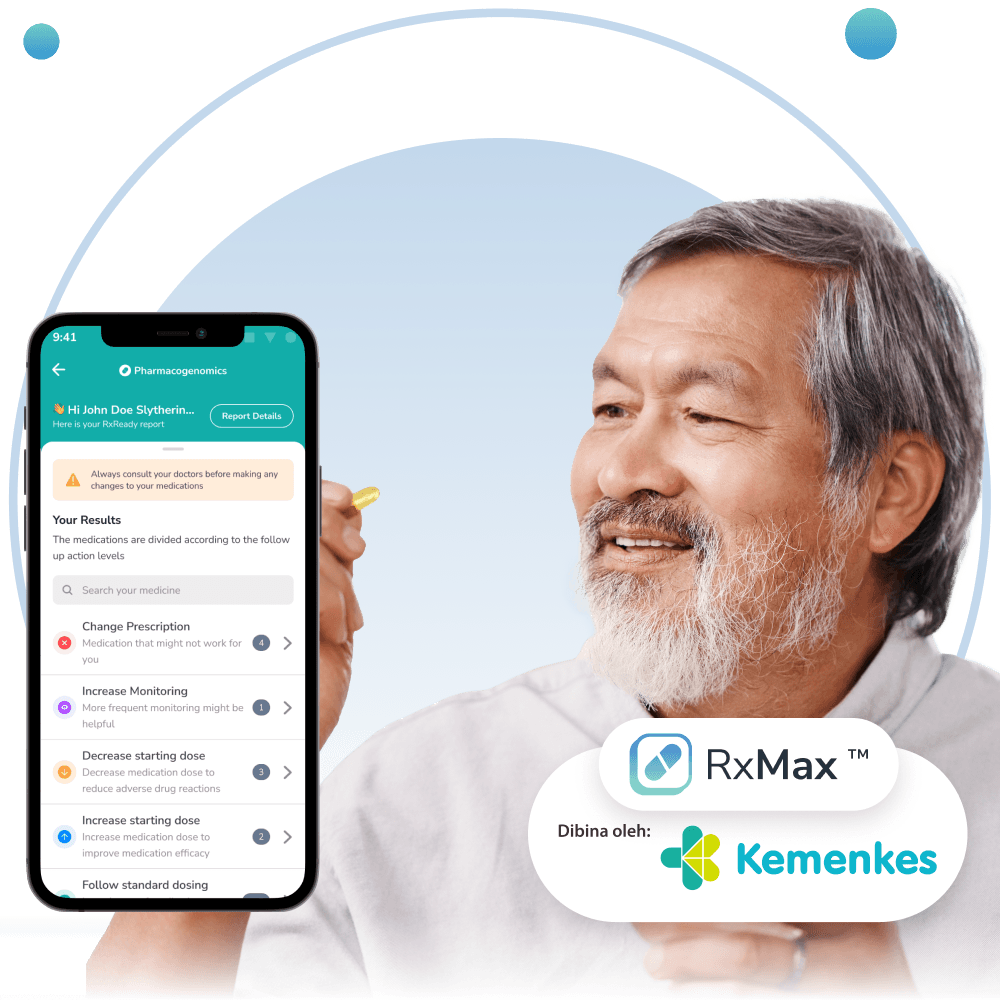
Pharmacogenomic Testing – Up to 240 Medications
The most comprehensive and cost-effective pharmacogenomics test in Southeast Asia
RxMax™ is a comprehensive pharmacogenomics report that utilizes genetic data input, offering valuable insights for personalized medicine and optimized treatment strategies.
- Find out how your body actually processes medications
- Find out the optimal medications for you
- Find out the right dosage of medications your body needs

Backed by Science, Built for You
Pharmacogenomic testing helps personalize your healthcare by using your genetic information to choose the right medications for you. This approach looks at how your body processes different drugs, so healthcare providers can select treatments that are more effective and cause fewer side effects.
For example, studies have shown that 30% of patients face harmful reactions to medications, which can lead to hospital stays and higher medical bills. But when medications are matched to your genes, the risk of serious side effects drops by 30%, according to research published in The Lancet.
Pharmacogenomics not only helps reduce side effects, but it also ensures that medications work better for your specific condition. For example, the heart medication clopidogrel is processed by a gene called CYP2C19. People with certain genetic variations may not respond as well to this drug. Studies show that 30% to 50% of people of Asian descent carry a gene variation that can make clopidogrel less effective. With pharmacogenomic testing, doctors can identify these variations and prescribe the best medication for each patient.
Our RxMax™ test looks at over 240 medications used to treat everything from heart conditions and blood pressure to mental health and cancer treatments. It also checks genes—ABCG2, HLA-A31:01, HLA-B15:02, CYP2C219, and others —to give you the most personalized medication advice possible.
View the complete gene and drug list click here.
Who Can Benefit from RxMax™?
This test can be performed for all ages. It is recommended for children over 2 years old who are no longer breastfeeding.
The accuracy or interpretation of your pharmacogenomics test result may be affected by procedures such as recent blood transfusion, liver or stel cell transplant. Please inform your doctor if you have undergone these procedures.
The test is only needed once in a lifetime. The test can be performed either preemptively as part of medical check-up or reactively when new medications are being prescribed or therapy failure occurs:
- Preemptive: Prevention is always better and more cost-efficient.
- Reactive: If there are indications and pharmacogenomic testing is believed to improve treatment success.
Why Choose Pharmacogenomics
RxMax™ can help you:

Find the right medication for you.
Get information about the correct dosage for your body.
Get actionable reports based on internationally recognized guidelines for over 240 medications.

Fast, Secure, & Science-Backed Testing
- Turnaround Time: 4-6 weeks
- Analysis at Nalagenetics Pte Ltd (Indonesia)
- Using microarray, short-reads and long-reads sequencing
What Happens After You Get Your Results?
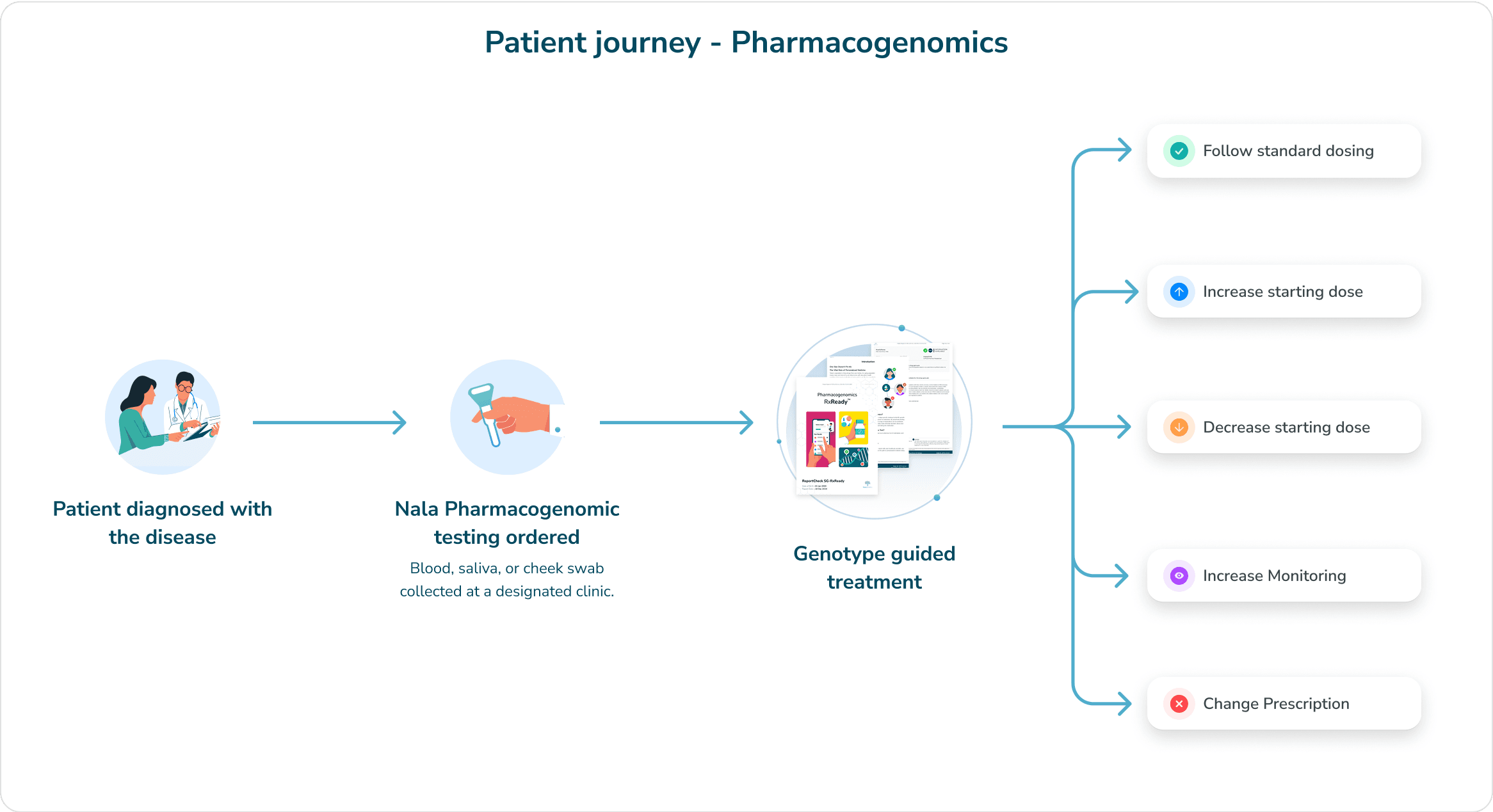
What Report Do I Get?
Personalized Medication Compatibility
Unlock Your Unique Medications Profile: Understand how your unique genetic makeup affects your response to over 240+ medications. This isn‘t just a test; it‘s a lifelong tool for medication management.
Optimize Your Treatment: Say goodbye to the guesswork. Receive personalized insights on which medications work best for you, reducing the trial and error often associated with finding the right medication.
See Sample Report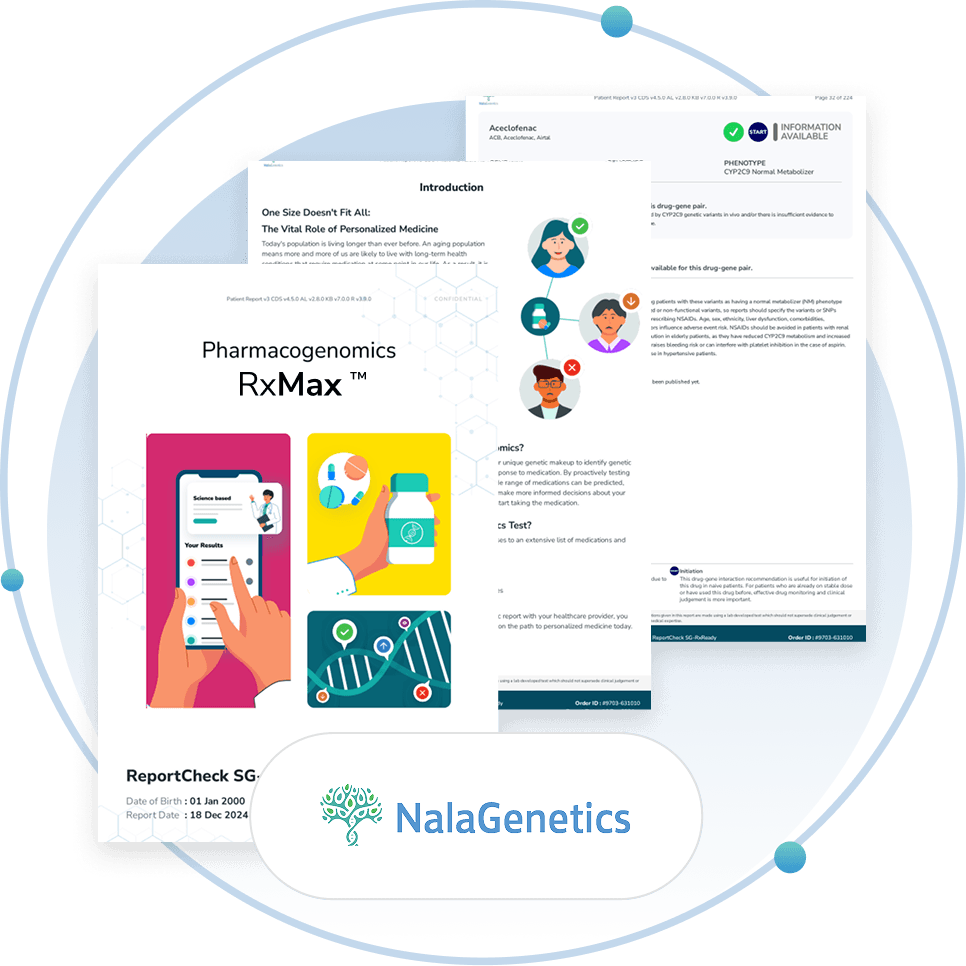

Find the right DNA test for you and your loved ones
Unlock total genetic insights to guide your health, nutrition, and wellness journey with personalized and preventive precision
For Individuals
Find our DNA Test product to align with your Goals


